After a quieter start to the year, Toronto’s luxury condominium market has begun to show signs of renewed momentum.
Activity increased noticeably through the spring and continued throughout the summer—typically one of the quieter periods for Toronto real estate. As we moved into September, that momentum became even more apparent. Buyers returned to the market, conversations became more serious, and more of that interest began translating into transactions.
While the market remains selective, there appears to be greater confidence than we saw at the beginning of 2026.
The Numbers Tell Only Part of the Story
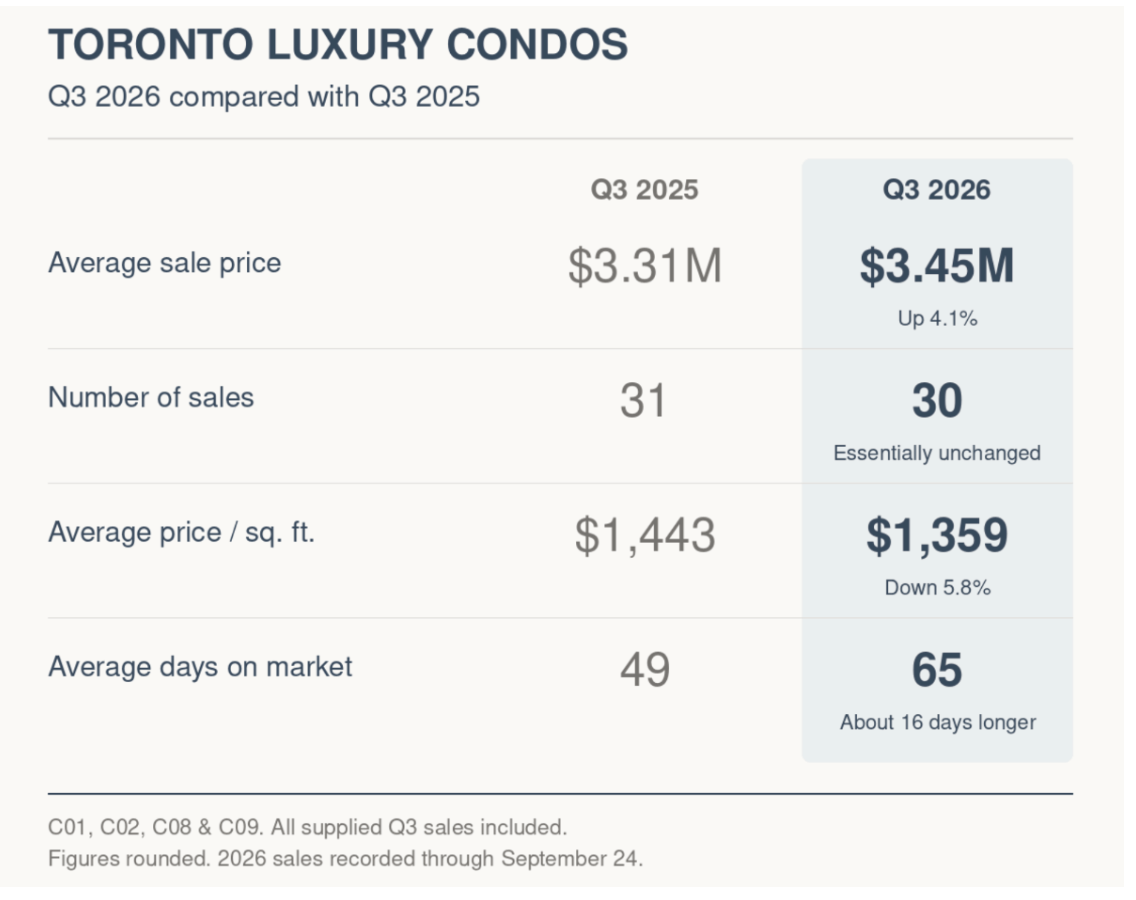
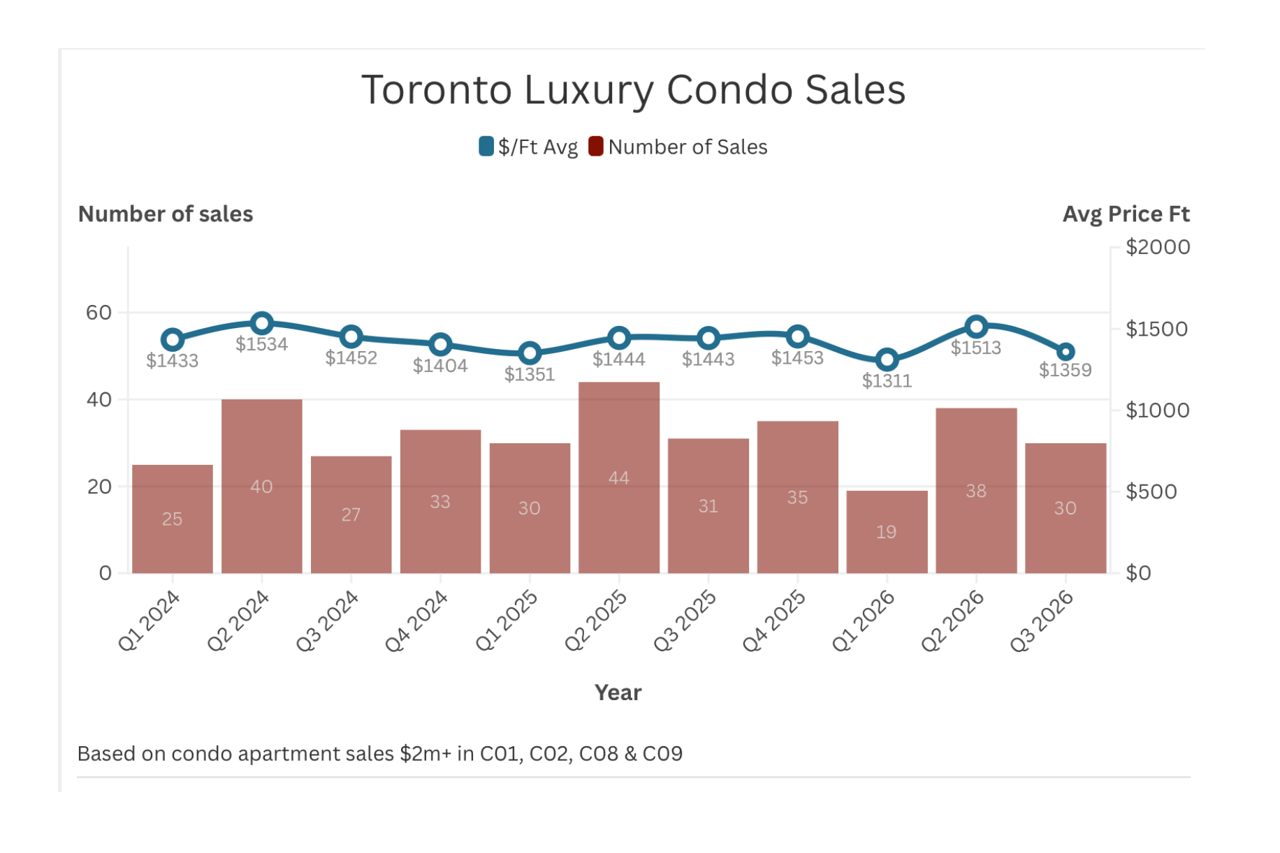
Third-quarter sales were remarkably consistent with last year, with 30 transactions compared with 31 during Q3 2025.
Average pricing was approximately $1,359 per square foot, compared with $1,443 during the same period last year. On the surface, that suggests some softening in values—but the composition of the properties that sold provides important context.
A number of larger suites have come to market this year, many requiring some degree of updating. Larger residences also tend to trade at lower prices per square foot than smaller, highly renovated suites.
Both factors have influenced the quarterly average.
Looking at 2026 as a whole provides a somewhat different perspective. Although fewer luxury properties have traded, average pricing has remained almost unchanged from last year at approximately $1,416 per square foot.
In other words, the market has been slower, but values—particularly for desirable, well-positioned properties—have proven relatively resilient.
Buyers Are Taking Their Time
Perhaps the more significant change has been how long it takes for transactions to come together.
Average selling time increased to approximately 65 days in Q3 2026, compared with 49 days during the same period last year.
This is consistent with what we are seeing firsthand.
Today’s luxury buyer generally feels little pressure to make an immediate decision. With more time to evaluate alternatives, buyers are doing their homework, comparing properties carefully and negotiating where they see an opportunity.
But that shouldn't be confused with an absence of demand.
When buyers find a property that offers the right combination of location, layout, condition and value, they are moving forward.
Quality Inventory Remains Surprisingly Limited
One of the more interesting characteristics of the current market is the continued shortage of truly compelling luxury inventory.
There may be properties available, but that doesn't necessarily mean buyers have an abundance of good options.
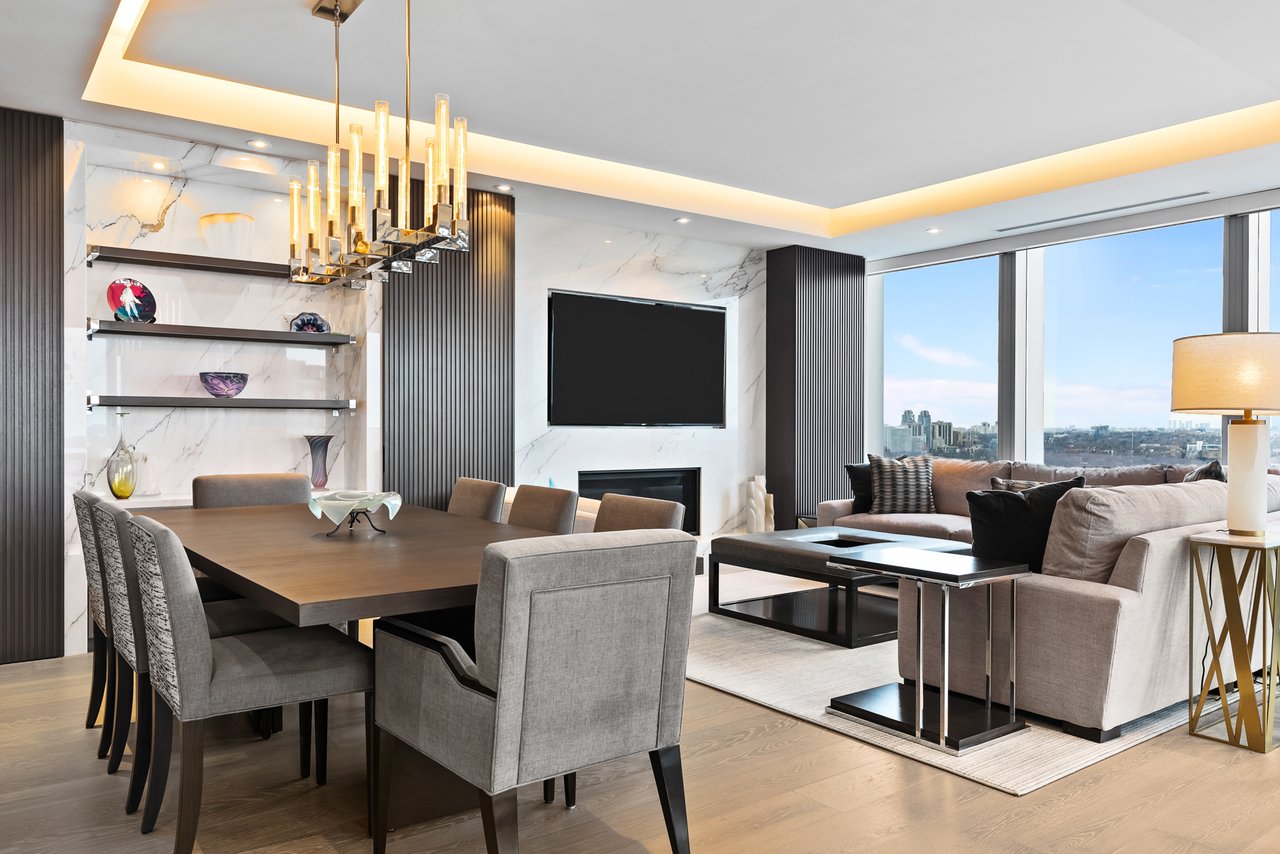
Larger, well-designed layouts remain particularly desirable. So do protected views, meaningful outdoor space, high-quality renovations, good parking and residences within Toronto's most established luxury buildings.
There simply haven't been enough properties combining these attributes coming to market.
When they do, buyers notice.
This is also why broad market statistics can sometimes be misleading at the luxury end. Two condominiums of similar size in the same neighbourhood—or even within the same building—can perform very differently depending on their floor plan, exposure, condition, views and overall presentation.
Increasingly, exceptional properties are behaving differently from average ones.
Opportunities Exist on Both Sides of the Market
For sellers, this is not a market where simply putting a property on MLS and waiting is necessarily enough.
Properties that are thoughtfully prepared, accurately positioned and supported by a strong marketing strategy can still achieve excellent results. But buyers are discerning, and pricing a property without considering its specific competition can lead to considerably longer selling times.
For buyers, the current environment is creating a different kind of opportunity.
Properties requiring updating, listings that have accumulated significant days on market, or homes that were simply positioned incorrectly at launch can present attractive possibilities.
In some cases, the opportunity isn't immediately obvious from the asking price. Understanding the property's history, the seller's positioning, recent comparable transactions and the relative strengths and weaknesses of competing properties can reveal where there may be room to negotiate.
A More Nuanced Luxury Market
The Toronto luxury condominium market of 2026 is neither uniformly strong nor uniformly weak.
It is increasingly property specific.
Well-located residences with excellent layouts, desirable views and high-quality finishes continue to attract attention. Properties with compromises may take longer to sell or require greater flexibility on price.
That distinction is important for both buyers and sellers.
In a rapidly rising market, broader momentum can sometimes compensate for imperfect pricing or positioning. In a more balanced and selective environment, the details matter considerably more.
Understanding not only what has sold, but why one property achieved a particular result while another did not, is becoming an increasingly important part of establishing value.
And for buyers and sellers navigating Toronto's luxury condominium market this fall, that may be the most important takeaway of all.